Last updated July 21, 2026
Long before it was a ski destination, this was a working coast — settled by Scandinavian immigrants, Swedish and Norwegian, who read the lake for a living. The lodge's name carries that history, and so does the country around it.
Nordhus is Norwegian for "north house" — nord plus hus. It's a small tribute to the Scandinavian families, from Norway and Sweden, who came in the late 1800s and built a life along this stretch of Lake Superior, fishing herring from open boats and salting their catch in the fish houses that still dot Highway 61. Lutsen itself was homesteaded in 1885 by a Swedish immigrant, Charles Axel Nelson, who named it for the 1632 Battle of Lützen in his native Sweden. The North Shore's Scandinavian roots run deep: they're in the place-names, the church steeples, the lefse and the lutefisk, and in the quiet, self-reliant temperament of the coast.
From homestead to ski country
What Lutsen is, and how it grew
First, what Lutsen actually is: not a city with a downtown, but a small community inside Lutsen Township — a rural unit of local government in Cook County. Only a few hundred people live here year-round, scattered along Highway 61 and up into the wooded hills. What put Lutsen on the map was never a Main Street; it was the mountains and the lake.
Nelson's 1885 homestead at the mouth of the Poplar River grew into Lutsen Resort — the oldest resort in Minnesota — first a fishing-and-hunting lodge for travelers who came up the shore by boat, then a genuine destination. (Its beloved historic lodge was lost to fire in February 2024; the owners have said they plan to rebuild.) For its first decades, Lutsen was known for exactly what drew Nelson: fishing, logging, and the wild beauty of the coast.
Skiing changed everything — and it came home from the war. Nelson's grandson George “Bub” Nelson Jr. volunteered at eighteen for the Army's 10th Mountain Division, the legendary World War II ski troops who trained on skis at Camp Hale, Colorado and fought in the mountains of Italy. He came back an alpine skier through and through — and he could see what no one else quite had: that the steep, snow-holding hill behind the family's resort was made for the sport. He talked the family into developing it, and in 1948 Lutsen opened its first runs on a rope tow. That became Lutsen Mountains, which grew into the largest ski area in the Midwest — four linked peaks, high-speed lifts, and a gondola over the Poplar River valley (a Midwest first when it opened in 1989). An Olympic medalist, Cindy Nelson, learned to ski on these very slopes.
Today Lutsen is a four-season resort area — downhill and Nordic skiing in winter; the gondola, mountain biking, and Superior Hiking Trail access in the green months — and still the gateway to the quieter North Shore beyond it. It's a place that turned wilderness into a home, then into a mountain, and never quite lost the wilderness.
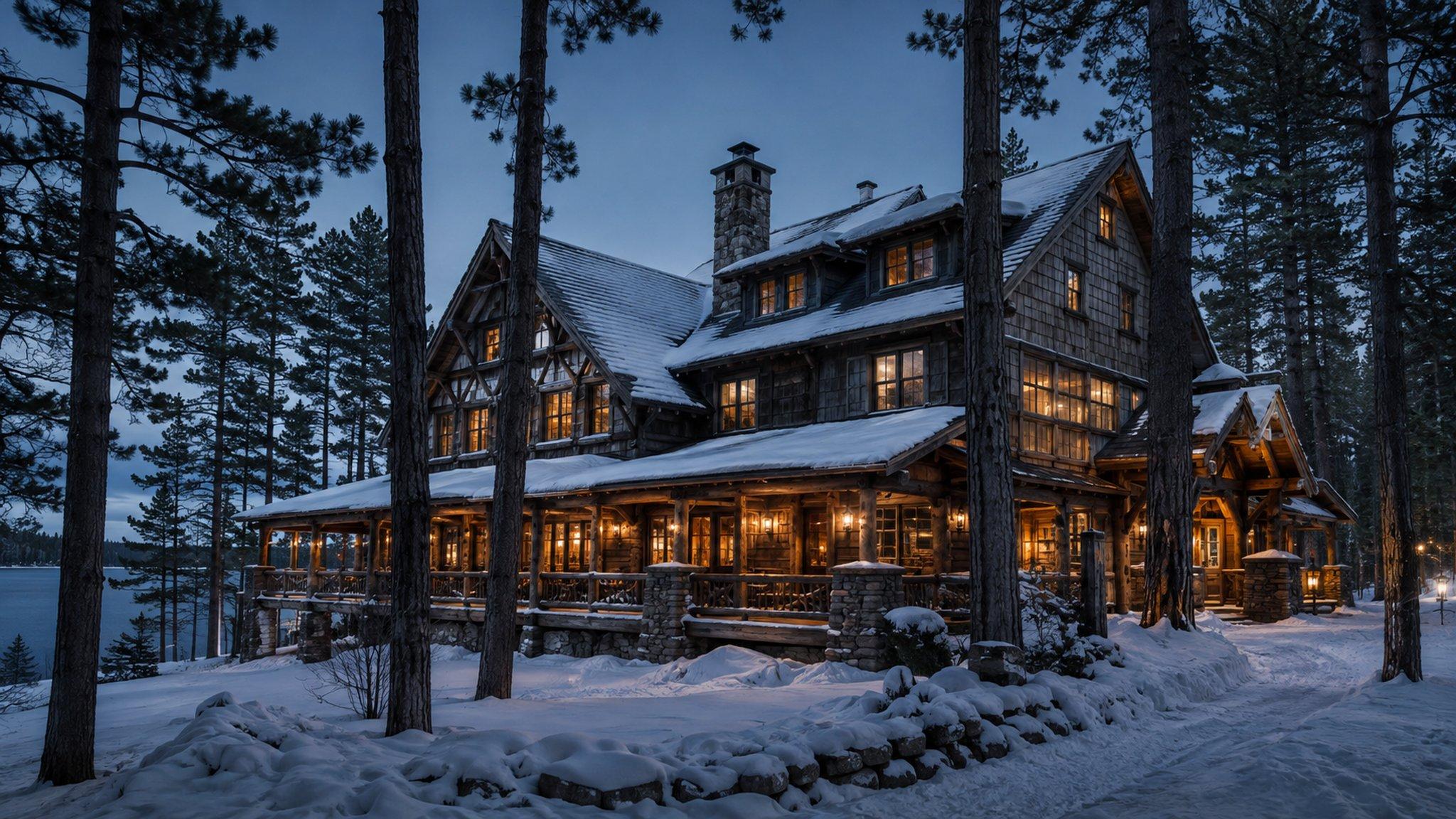
Where Nordhus fits. The lodge sits right in the middle of that story — three miles from Lutsen Mountains, about ten minutes to the largest ski area in the Midwest, with the Norpine Nordic trails at the edge of the yard and eight wooded acres above the big lake. It's the modern version of what Nelson started in 1885: a warm north house (that's what Nordhus means) for the whole group — basecamp for the mountain, the trail, and the shore, with the fire and the long table waiting when the day is done.
The fishing coast
A working heritage, minutes away
The town of Tofte, just down the shore, was founded by Norwegian fishing families — and today it holds the North Shore Commercial Fishing Museum, a small, lovingly kept place that tells the story of the herring years: the boats, the nets, the ice houses, and the families who worked the big water in every weather. It sits about ten to twelve minutes from the lodge, and it's one of the best rainy-day stops on the shore — a half hour that makes the whole coast read differently on the drive home.
Watch for the little fish houses along Highway 61. They're not decoration — they're what this coast was, and in a few places still is.
A place in the woods
Cook County's North Woods writers
The woods behind this shore have a literary history too. In the mid-1950s a writer named Helen Hoover left a career in Chicago and moved with her husband to a cabin on Gunflint Lake, up the Gunflint Trail in this same Cook County. Out of that life came a series of beloved North Woods memoirs — among them The Long-Shadowed Forest, The Gift of the Deer, and A Place in the Woods — that quietly shaped how a generation understood this country: the deer at the door, the turn of the seasons, the work and wonder of making a home in the northern forest.
We won't reprint her — her books are worth reading whole — but we point guests to them happily. Read on the porch with the lake below you and the same forest around you, and you're about as close to her North Woods as a book can put you.
Find the reading. Helen Hoover's memoirs are easy to find secondhand, and the University of Minnesota Press published a 2023 biography, Her Place in the Woods: The Life of Helen Hoover — a good starting point. Ask us and we'll point you to a copy, or pick one up at Drury Lane Books in Grand Marais, the North Shore's independent bookstore.
How to feel it here
The heritage, first-hand
You don't have to go looking hard. Buy fish from a shore smokehouse and eat it on the deck. Spend a gray afternoon at the fishing museum in Tofte. Browse Drury Lane Books in Grand Marais and take home a Hoover paperback for the fire. Notice the Scandinavian names on the mailboxes and the map. It's the same instinct that runs through the whole guide: the North Shore is a real place with a real past, and the more of it you see, the better the stay.
Common questions
What does the name Nordhus mean?
Nordhus is Norwegian for 'north house' — nord (north) plus hus (house). It's a nod to the Scandinavian immigrants — Norwegian and Swedish — who settled and fished this stretch of Lake Superior's North Shore. Lutsen itself was founded in 1885 by a Swedish immigrant, Charles Axel Nelson, who named it for the Battle of Lützen.
Where can you learn about North Shore history near Lutsen?
The North Shore Commercial Fishing Museum in Tofte, about ten to twelve minutes from the lodge, preserves the story of the Scandinavian families who built a herring-fishing culture along this coast. It's a small, well-loved museum and an ideal rainy-day stop.
What should you read about Minnesota's North Woods?
Helen Hoover's memoirs of leaving Chicago to live in the Cook County woods — including 'The Gift of the Deer' and 'A Place in the Woods' — are the classic North Woods reading, written from this very county. They make ideal fireside reading during a stay.