Last updated July 21, 2026
The Lake Superior agate is Minnesota's state gemstone — a banded stone born about a billion years ago, when this whole region was splitting open with lava. The beaches below the lodge are strewn with them, if you know how to look. And when you come back, you'll find the agate is built right into the house.
What a Lake Superior agate is
A billion years in your palm
Roughly a billion years ago, a great rift tried to tear North America apart here, flooding the region with volcanic rock. Gas bubbles in that cooling lava filled, over ages, with band after band of quartz — and iron in the water stained many of them the deep reds and oranges that make a Lake Superior agate unmistakable. Glaciers later scattered them down the shore. Pick one up and you're holding a slow, patient billion years in the palm of your hand.
Where & how to hunt
On the beaches near Lutsen
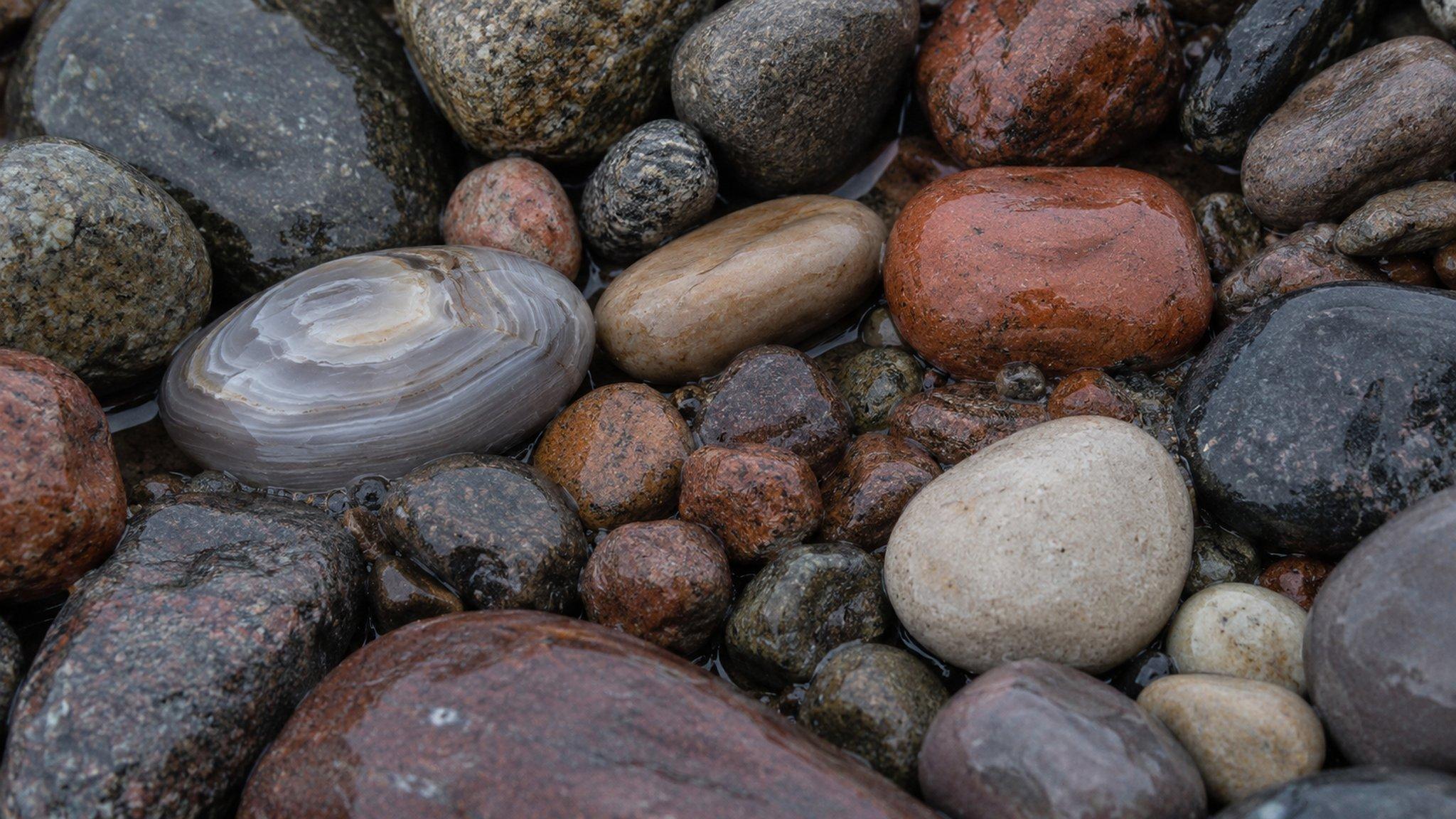
Hunt the public cobble beaches — the rocky ones, not the sandy — around Lutsen, Tofte and Schroeder, near Grand Marais, and up toward Grand Portage. The single best time is right after a big Lake Superior storm, when the waves heave fresh stone up onto the shore. Low, raking sun helps; so does looking where the rocks are wet, because an agate is semi-translucent and glistens when wet.
To tell an agate from an ordinary pebble, wet it and look for three things: translucency, banding, and a glossy, waxy sheen. Watch for concentric "eye" rings, connected "fortification" bands that echo the shape of the stone, or straight "water-level" bands. Most are between the size of an almond and a walnut — small, which is exactly why it's such a good, slow way to spend an hour with the kids.
The honest rules. Collecting is not allowed in Minnesota state parks — hunt the public shoreline outside them, and take only a little. Some spots, like Sugarloaf Cove, are look-but-don't-take; when in doubt, check the rules for that stretch before you pocket a find. The lake keeps making more.
Agate, built into the lodge
Bring your finds home
Here's the part we love: at Nordhus, the agate isn't only on the shore — it's in the house. The lodge has a Lake Superior agate countertop and an agate fireplace, the same banded stone you've been hunting all afternoon, lit from the kitchen and glowing beside the hearth. Spread the day's finds out on that counter, hold the good ones up to the light, and set them by the fire. It's a small thing that makes the hunt feel like it has a home — because here, it does.
Hunt a billion-year-old stone on the shore in the afternoon, and warm your hands beside it that night.
Common questions
Where can you find Lake Superior agates near Lutsen?
Look on the public cobble beaches of the Lutsen–Tofte–Schroeder area, around Grand Marais, and up toward Grand Portage. Gravelly, rocky beaches are far better than sandy ones, and the hunting is best right after a big Lake Superior storm has churned up fresh stone. Note that some spots, like Sugarloaf Cove, are look-but-don't-take, and collecting is not allowed in Minnesota state parks.
What does a Lake Superior agate look like?
Wet the stone and look for translucency, banding, and a glossy, waxy sheen — agates glisten when wet because they're semi-translucent. Watch for concentric 'eye' rings, connected 'fortification' bands, or parallel 'water-level' bands, often in reds and oranges from iron. Most are between the size of an almond and a walnut.
Can you collect agates in Minnesota state parks?
No — collecting rocks, including agates, is not allowed in Minnesota state parks. Hunt instead on public beaches outside the parks, take only a little, and check the rules for any specific spot before you pocket a find.