Last updated August 7, 2026
There is a version of this trip where the house is a place to sleep between park days. That is July. You are up early to beat the bridge, out until the light goes, back late enough that dinner is whatever is quickest. The house is excellent and you barely see it.
Then Labor Day passes and the whole thing inverts.
What actually changes
The park stops being a logistics problem. That is the part everyone writes about — thinner crowds, easier parking, the shuttle still running. It is true and our season-by-season guide covers it properly.
What nobody tells you is what it does to the house. When you are not spending the day managing crowds, you stop treating the property as a base and start treating it as the destination. Guests who book a week in July usually give one day back to the house and tell us afterwards it was the best one. In September you get that day five times.
The shore, when you are actually there to see it
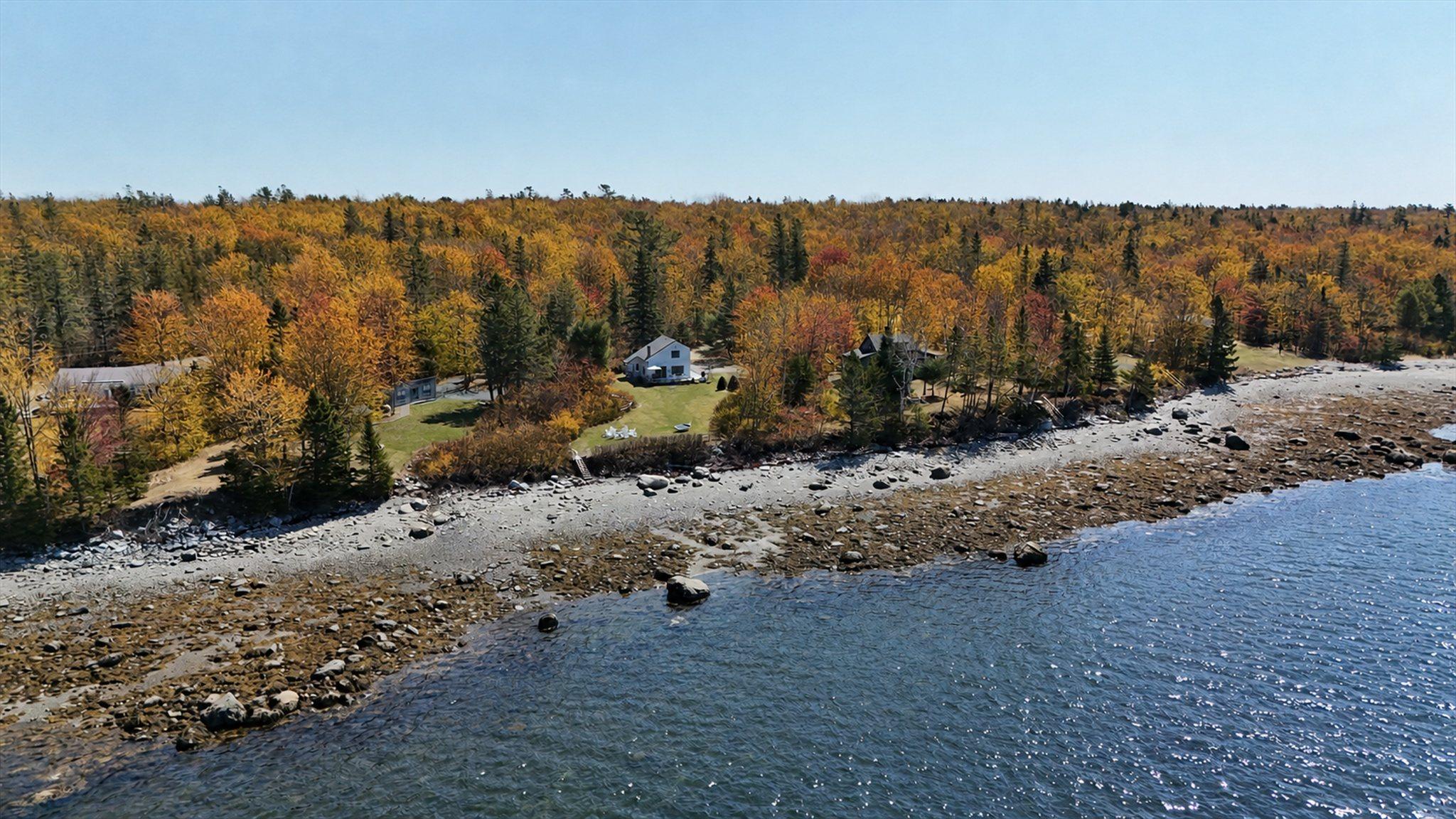
The tide here moves about ten feet. Low water opens up ledges that were underwater at breakfast — tide pools, periwinkles, sea glass, seals out on the rocks if they feel like it. There is a tide clock in the house so you can time it.
That is true in every season. What changes in the shoulder is that you are home to use it. In summer the tide turns while you are somewhere near Jordan Pond. In late September you are on the lawn with coffee when the water goes out, and the shore doubles in size in front of you.
The other thing: the water is still warm. It has had three months of sun on it and it does not give that back quickly — the coast lags the calendar. The air cools off long before the bay does.
The evenings are the whole argument
Summer here has beautiful long light and you are usually driving through it. In the shoulder the days shorten enough that sunset stops being something that happens after dinner and becomes the thing you plan around.
The fire pit earns its keep. So do the blankets. The lawn runs down to the water, the bay goes dark, and there is nowhere you need to be. Bald eagles are resident on this bay and are often working the shoreline in the last light — wild, so a chance rather than a promise, which is exactly what makes it worth watching for.
This is the part guests write to us about. Not the summit hike.
The kitchen stops being optional
In peak season you eat out because you are already out. In the shoulder you are back at the house by late afternoon, and a full kitchen turns from a convenience into the reason the evening works.
Trenton Bridge Lobster Pound is on your road, not a detour — steamers over a wood fire since 1956. The kitchen here has a lobster pot and the tools for exactly this. Pick up on the way past, put the fire on outside, and the evening takes care of itself.
Ellsworth is about twelve minutes for a proper provisioning run. Do it once on the way in and you have bought yourself the rest of the week.
Two honest caveats
Colour and quiet are about a month apart. Peak foliage on Mount Desert Island runs roughly October 10–22, and those weekends rival August for crowds — genuinely the busiest days of the year here. September gives you the quiet and only the first hint of colour, mostly in the wetlands and birches. You are choosing one or the other. If you want both, come mid-October on a Tuesday.
Check what is open before you plan a specific meal around it. Services on this coast start thinning as the season winds down, and the further into autumn you come the more that is true. The park itself stays fully open — the Park Loop Road does not close until December 1 — but individual restaurants and tour operators set their own end dates and they move year to year. Ask us when you book and we will tell you what is actually running for your dates.
Who this season suits
| If you are… | The shoulder is… |
|---|---|
| Coming for Acadia first, house second | Still excellent — the park is easier in every way |
| Coming for the house, the shore, the quiet | The best weeks of the year here, by some distance |
| Travelling with young children | Easier: no crowds, no parking stress, shorter drives tolerated better |
| Chasing peak foliage | Mid-to-late October, and go midweek |
| Working remotely for a week | The strongest case — fiber Wi-Fi, quiet house, and a shore to close the laptop for |
Common questions
Is September a good time to visit Eagles Nest?
It is the time we would pick. The summer crowds go home after Labor Day, the water is still warm from three months of sun, the fog eases off, and the park is fully open with the shuttle still running. You get Acadia without the logistics and the house without the competition.
Is the water still warm enough to enjoy in September?
The bay holds its summer heat well into the autumn — the water cools far more slowly than the air. It is a northern coast and always a bracing swim, but September is not the drop-off people expect.
Will things be closed if we come in the shoulder season?
The park stays fully open; the Park Loop Road closes December 1. Individual restaurants, shops and boat operators set their own seasonal end dates and those shift year to year, so we would not want to promise you a specific place is open. Ask when you book and we will tell you what is running for your dates.
Is October worth it for the foliage?
Yes, with one condition: come midweek. Peak colour on Mount Desert Island is roughly October 10–22 and it is spectacular. Those weekends are the most crowded days of the entire year here. Staying on the mainland side in Trenton helps a great deal, but a peak-colour Saturday is not a quiet day out.
What is there to do at the house itself in the shoulder season?
The shore on a falling tide, the fire pit, the lawn, the hammock while the weather holds, and a kitchen worth cooking in. Two wooded acres and a private rocky shorefront with nobody on it. If the weather turns, that is what the fire and the lobster pot are for — wet days are when a house beats a hotel room by the widest margin.