Stilla · July 18, 2026 · Updated July 21, 2026
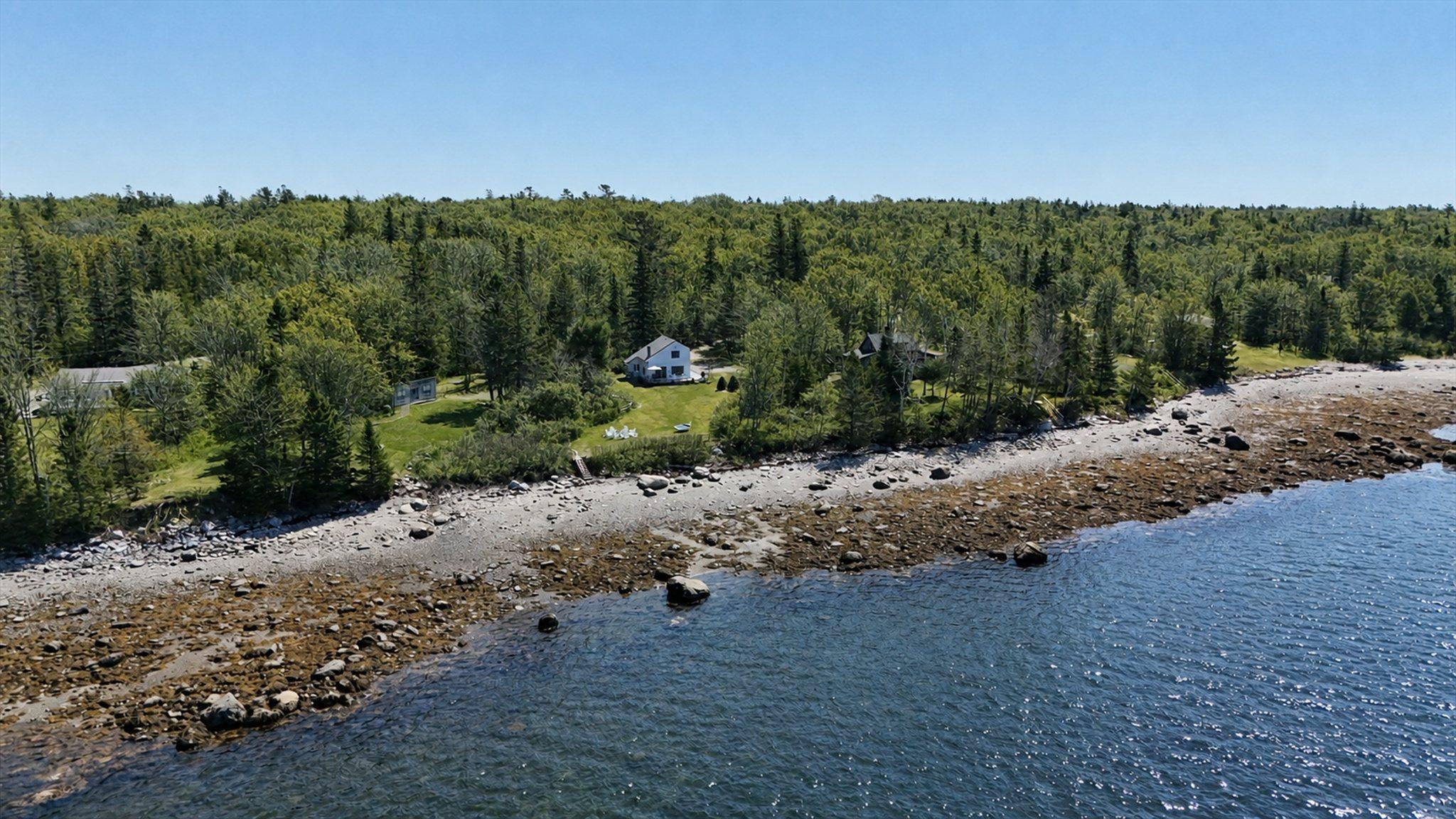
Every stretch of the Maine coast has a name that belongs to the people who lived alongside it — a ledge, a cove, a point that shows up on no map but in every local conversation. On the shore below Eagles Nest, that name is Smiths Ledge.
Stand at the top of the stairs on a falling tide and the shape of this coast explains itself. There is no sand here, and there never was. What you're looking at is a rocky shore in the truest sense: granite ledges worn smooth, tide pools caught in the low places, rockweed draped over everything the water touches twice a day. It is the real Downeast coast — the one that rewards a slow morning and good shoes.
Reading the granite
The bedrock of this coast is granite, and it sets the terms for everything that happens on the shore. Where soft ground is shifting and forgiving, a granite ledge is hard, fixed, and honest: it shows you exactly where the tide has been by the bands of barnacle, rockweed, and bare stone stacked up its face. Learn to read those bands and you can tell, at a glance, roughly where in the tide cycle you've arrived.
Along this part of the Gulf of Maine you'll often see the granite laced with darker stone — narrow seams of a different rock cutting straight across the lighter ledge. On the most dramatic granite headlands nearby, at Schoodic Point, those seams (basalt dikes) are wide enough to walk along; on a smaller shore like ours they read as dark ribbons in the rock. They're a reminder that this coastline is the eroded, sea-level edge of something much older and much bigger than the view suggests.
The tide is the main event
The tide on this coast rises and falls roughly ten to twelve feet, twice a day. That is not a detail — it is the single most important thing to understand about the shore. The stretch of ledge you walk at breakfast is underwater by lunch, and a pool that holds a crab at nine in the morning is open ocean by early afternoon. The shore you meet is never quite the same shore twice.
The best window for exploring opens about two hours either side of low tide, when the ledges and pools are fully exposed. That's when the tide-pool life shows itself: periwinkles and barnacles on the rock, green crabs tucked under the weed, and — if you're patient and lucky — a sea star. The rule on our shore is the same as the rule inside Acadia: look, touch gently, and put every creature and stone back exactly where it lived. A tide pool is a living system, not a souvenir shop.
A tide clock helps you plan the day. Unlike a normal clock, it doesn't tell time — it tracks the roughly six-hour-and-twelve-minute swing between high and low water. Low tide is your hour on the ledges; the incoming tide is your cue to head back up the stairs. There's a tide clock in the house for exactly this reason.
Respecting the shore
A private rocky shore is a gift, and it asks for a little care in return. Wet granite and rockweed are genuinely slippery — more than people expect — so real shoes beat flip-flops every time, and the stairs down from the lawn are worth taking one at a time. The water is cold year-round, there are no lifeguards on a private shore, and on a big-surf day the ocean deserves your full attention. Keep small children within reach, and never turn your back on the water. That caution is the trade for having the whole shore to yourself while everyone else is hunting for a parking spot in town.
Where the eagles come in
The house takes its name from the birds, and they are the other half of this shore's character. Bald eagles are resident in this area and are often seen working the bay, especially in the morning light — along with seals hauled out on the rocks, the occasional porpoise offshore, and deer and red foxes back up in the tree line. They're wild, so the shore promises the chance of a sighting, never the guarantee. That uncertainty is exactly what makes spotting one worth something.
Until then, the honest version stands: the eagles are residents, not employees. Come down to the ledges on a falling tide, watch the bay, and see what the morning brings.